












69

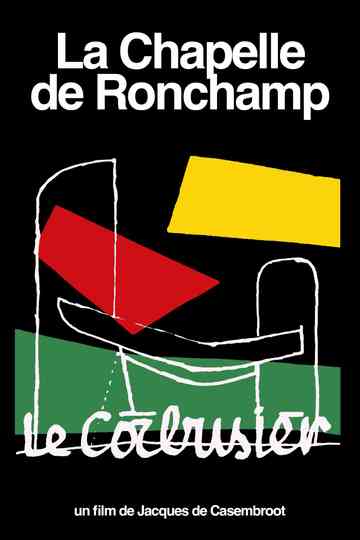
Charles-Édouard Jeanneret-Gris, known as Le Corbusier, is a Swiss architect, town planner, decorator, painter, sculptor, author, naturalized French, born October 6, 1887 in La Chaux-de-Fonds (Switzerland) and died August 27, 1965 in Roquebrune-Cap-Martin (France). He is one of the main representatives of the modern architectural movement. Living in Paris since 1917, he participated in the creation of Esprit Nouveau, an art and architecture magazine in which he took the pseudonym Le Corbusier. Subsequently, Le Corbusier became known through works describing his techniques and his vision of his art: Vers Une Architecture (1923), Urbanisme (1924). He implements his theories in several projects, always combining aesthetics with functionality. From 1928, Le Corbusier took part in the International Congresses of Modern Architecture. In the Charter of Athens, he presents his conceptions of architecture linked to social and daily urban life. Le Corbusier also worked in town planning and design. He is known for being the inventor of the "Habitation Unit", a concept on which he began to work in the 1920s, an expression of theoretical reflection on collective housing. 'The housing unit of conforming size' (name given by Le Corbusier) will only be built during the reconstruction after the Second World War, in five examples, all different, in Marseille, Briey-en-Forêt, Rezé , Firminy and Berlin. Its design envisages in the same building all the collective facilities necessary for life — daycare, laundry, swimming pool, school, shops, library, meeting places. At the beginning of the thirties, he came to Algeria several times. His lectures enthuse and stimulate young architects. His project for Algiers (unfinished) "Project Obus" consisted of winding a building of more than ten kilometers, the roof of which was a highway. Thousands of people would thus face the Mediterranean along the coast, from Bologhine to El-Harrach. In 1933, he discovered the organic architecture of the fortified Ibadi villages of the M’Zab valley in the Algerian Sahara. Le Corbusier will be marked for life "a miracle of sagacity, of learned and beneficial order, a brilliant anatomy". We will find the influence of M'Zab in his work the chapel of Ronchamp (1955), inspired by the mosque of Sidi Brahim in El Atteuf. After the war, he developed his “housing units” and created the Cité Radieuse in Marseille. He integrates Charlotte Perriand and Pierre Jeanneret into his team. A great theoretician, he continued his publications with Modulor (1950), a presentation of modern architecture. The following year, Le Corbusier went to India to create numerous establishments in Chandigarh (the Capitol, the Palace of Justice, the Secretariat and the Palace of Assembly). The work and thoughts of Le Corbusier were particularly influential on post-war generations of architects, profoundly impacting contemporary architecture. The architectural work of Le Corbusier brings together 17 sites (including 10 in France, the others being spread over three continents) was classified as a UNESCO world heritage site on July 17, 2016. A European cultural itinerary entitled “Le Corbusier Destinations: architectural walks » was created in early May 2019.

Moviefone is your ultimate guide to what's new in theaters and streaming on any screen.