












Acker Bilk Biography
Bernard Stanley "Acker" Bilk, MBE (28 January 1929 – 2 November 2014) was a British clarinetist and vocalist known for his breathy, vibrato-rich, lower-register style, and distinctive appearance – of goatee, bowler hat and striped waistcoat. Bilk's 1962 instrumental tune "Stranger on the Shore" became the UK's biggest selling single of 1962. It spent more than 50 weeks on the UK charts, peaking at number two, and was the second No.
1 single in the United States by a British artist. Bilk was born in Pensford, Somerset, in 1929. He earned the nickname "Acker" from the Somerset slang for "friend" or "mate". His parents tried to teach him the piano but, as a boy, Bilk found it restricted his love of outdoor activities, including football. He lost two front teeth in a school fight and half a finger in a sledging accident, both of which he said affected his eventual clarinet style.
On leaving school Bilk joined the workforce of W.D. & H.O. Wills's cigarette factory in Bristol; he stayed there for three years, putting tobacco in the cooling room and then pushing tobacco through a blower. He then undertook three years of National Service with the Royal Engineers in the Suez Canal Zone. He learned the clarinet there after his sapper friend, John A.
Britten, gave him one bought at a bazaar and for which Britten had no use. The clarinet had no reed, so Britten fashioned a makeshift one for the instrument from scrap wood. Bilk later borrowed a better instrument from the army and kept it after demobilisation. After National Service, Bilk joined his uncle's blacksmith business and qualified in the trade.
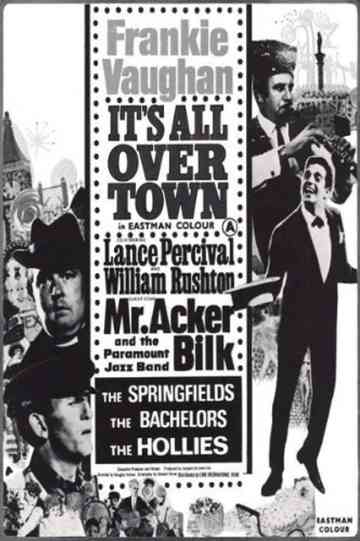
Bilk played with friends on the Bristol jazz circuit and in 1951 moved to London to play with Ken Colyer's band. Bilk disliked London, so returned west and formed his own band in Pensford called the Chew Valley Jazzmen, which was renamed the Bristol Paramount Jazz Band when they moved to London in 1951. Their agent then booked them for a six-week gig in Düsseldorf, Germany, playing in a beer bar seven hours a night, seven nights a week.
During this time, Bilk and the band developed their distinctive style and appearance, complete with striped waistcoats and bowler hats. After returning from Germany, Bilk became based in Plaistow, London, and his band played in London jazz clubs. It was from here that Bilk became part of the boom in trad jazz in the United Kingdom in the late 1950s.
In 1960, their single "Summer Set" (a pun on their home county), co-written by Bilk and pianist Dave Collett, reached number five on the UK Singles Chart, and began a run of 11 chart hit singles. ("Summer Set" was also used prominently in Daniel Farson's controversial 1960 television documentary Living for Kicks, a portrait of British teenage life at the time).
In 1961 "Acker Bilk and His Paramount Jazz Band" appeared at the Royal Variety Performance. ... Source: Article "Acker Bilk" from Wikipedia in english, licensed under CC-BY-SA 3.0.