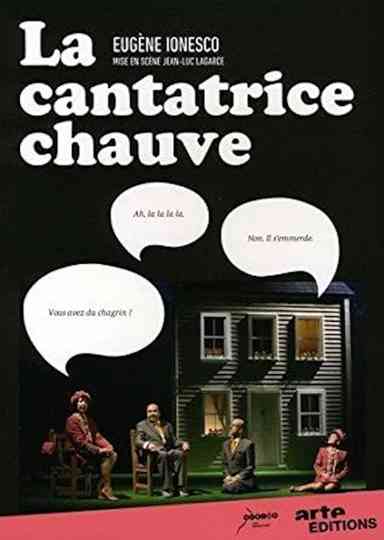
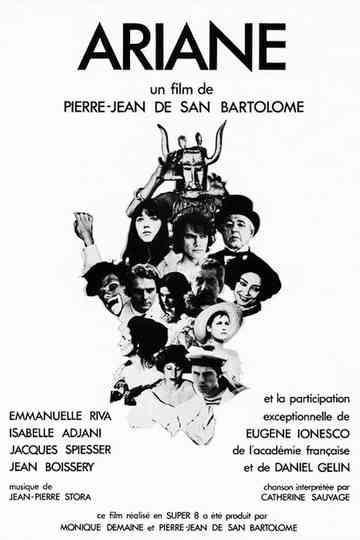
Eugène Ionesco (born Eugen Ionescu, 26 November 1909 – 28 March 1994) was a Romanian-French playwright who wrote mostly in French, and was one of the foremost figures of the French avant-garde theatre in the 20th century. Ionesco instigated a revolution in ideas and techniques of drama, beginning with his "anti play", The Bald Soprano which contributed to the beginnings of what is known as the Theatre of the Absurd, which includes a number of plays that, following the ideas of the philosopher Albert Camus, explore concepts of absurdism. He was made a member of the Académie française in 1970, and was awarded the 1970 Austrian State Prize for European Literature, and the 1973 Jerusalem Prize. Ionesco was born in Slatina, Romania, to a Romanian father belonging to the Orthodox Christian church and a mother of French and Romanian heritage, whose faith was Protestant (the faith into which her father was born and to which her originally Greek Orthodox Christian mother had converted). Eugène was baptized into the Orthodox Christian faith. Many sources cite his birthdate as 1912, this error being due to vanity on the part of Ionesco himself, who wanted the year of his birth to coincide with that of when his idol, Romanian playwright Caragiale, died. He spent most of his childhood in France and, while there, had an experience he claimed affected his perception of the world more significantly than any other. As Deborah B. Gaensbauer describes in Eugène Ionesco Revisited, "Walking in summer sunshine in a white-washed provincial village under an intense blue sky, [Ionesco] was profoundly altered by the light." He was struck very suddenly with a feeling of intense luminosity, the feeling of floating off the ground and an overwhelming feeling of well-being. When he "floated" back to the ground and the "light" left him, he saw that the real world in comparison was full of decay, corruption and meaningless repetitive action. This also coincided with the revelation that death takes everyone in the end. Much of his later work, reflecting this new perception, demonstrates a disgust for the tangible world, a distrust of communication, and the subtle sense that a better world lies just beyond our reach. Echoes of this experience can also be seen in references and themes in many of his important works: characters pining for an unattainable "city of lights" (The Killer, The Chairs) or perceiving a world beyond (A Stroll in the Air); characters granted the ability to fly (A Stroll in the Air, Amédée, Victims of Duty); the banality of the world which often leads to depression (the Bérenger character); ecstatic revelations of beauty within a pessimistic framework (Amédée, The Chairs, the Bérenger character); and the inevitability of death (Exit the King). He returned to Romania with his father and mother in 1925 after his parents divorced. There he attended Saint Sava National College, after which he studied French Literature at the University of Bucharest from 1928 to 1933 and qualified as a teacher of French. While there he met Emil Cioran and Mircea Eliade, and the three became lifelong friends. ... Source: Article "Eugène Ionesco" from Wikipedia in English, licensed under CC-BY-SA 3.0.