








Highlights
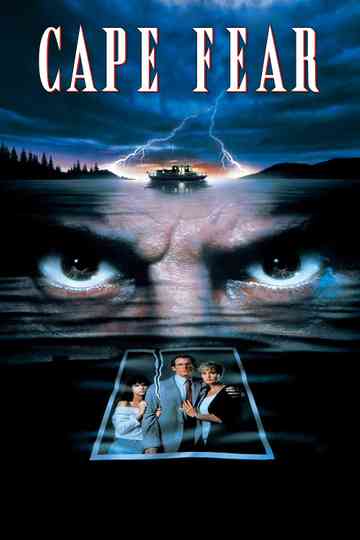
Cape Fear Season 1 - Get Pumped Clip
Cape Fear
The Devil Wears Prada 2 - Runway Fallout Clip
The Devil Wears Prada 2
Mortal Kombat II - Exclusive Interviews
Mortal Kombat II
Evil Dead Burn - Hunter Doohanand and Luciane Buchanan at the Los Angeles Fan Event
Evil Dead Burn
Margo's Got Money Troubles Season 1 - Unforgettable Nonverbal Acting Clip
Margo's Got Money Troubles
Disclosure Day - Official Poster
Disclosure Day
Daredevil: Born Again Season 2 - Matt Murdock & Jessica Jones Clip
Daredevil: Born Again
House of the Dragon Season 3 - Tom Glynn-Carney at the World Premiere After-Party
House of the Dragon
The Odyssey - Zendaya Exclusive Interview
The Odyssey
House of the Dragon Season 3 - Harry Collett at the World Premiere After-Party
House of the Dragon
Remarkably Bright Creatures - Sally Field and Lewis Pullman Exclusive Interviews
Remarkably Bright Creatures
Dune: Part Three - Javier Bardem as Stilgar
Dune: Part Three
Euphoria Season 3 - Saddle Up Clip
Euphoria
Furious Season 1 - Official Poster
Furious

Gregory Peck

Gregory Peck
Latest Trailers
Birthday
April 5th, 1916
From
La Jolla, California, USA
Actor

Gregory Peck Biography

Eldred Gregory Peck (April 5, 1916 – June 12, 2003) was an American actor and one of the most popular film stars from the 1940s to the 1970s. In 1999, the American Film Institute named Peck the 12th-greatest male star of Classic Hollywood Cinema. After studying at the Neighborhood Playhouse with Sanford Meisner, Peck began appearing in stage productions, acting in over 50 plays and three Broadway productions.

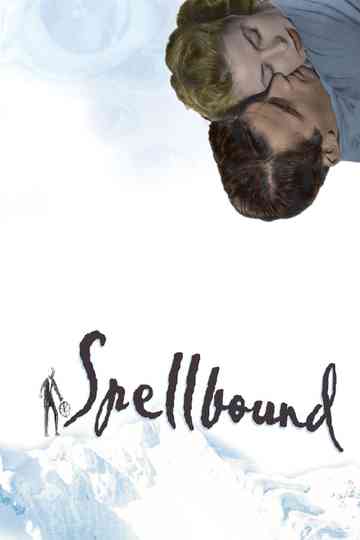
He first gained critical success in The Keys of the Kingdom (1944), a John M. Stahl–directed drama which earned him his first Academy Award nomination. He starred in a series of successful films, including romantic-drama The Valley of Decision (1944), Alfred Hitchcock's Spellbound (1945), and family film The Yearling (1946). He encountered lukewarm commercial reviews at the end of the 1940s, his performances including The Paradine Case (1947) and The Great Sinner (1948).

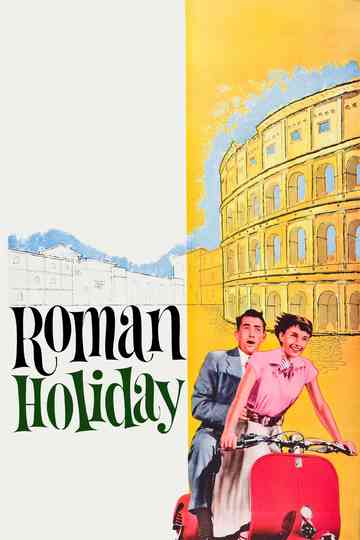
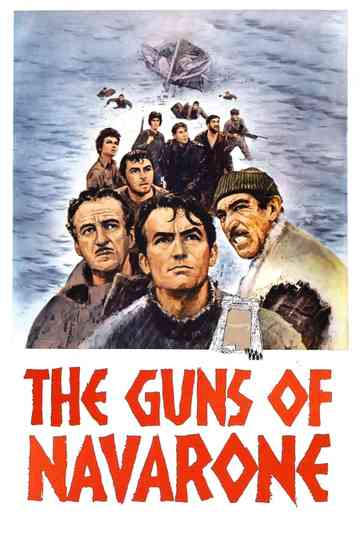
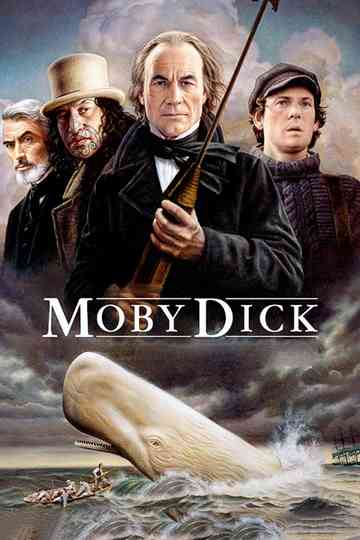
Peck reached global recognition in the 1950s and 1960s, appearing back-to-back in the book-to-film adaptation of Captain Horatio Hornblower (1951) and biblical drama David and Bathsheba (1951). He starred alongside Ava Gardner in The Snows of Kilimanjaro (1952) and Audrey Hepburn in Roman Holiday (1953), which earned Peck a Golden Globe award. Other notable films in which he appeared include Moby Dick (1956, and its 1998 mini-series), The Guns of Navarone (1961), Cape Fear (1962, and its 1991 remake), The Omen (1976), and The Boys from Brazil (1978).

Throughout his career, he often portrayed protagonists with "fiber" within a moral setting. Gentleman's Agreement (1947) centered on topics of antisemitism, while Peck's character in Twelve O'Clock High (1949) dealt with post-traumatic stress disorder during World War II. He won the Academy Award for Best Actor for his performance as Atticus Finch in To Kill a Mockingbird (1962), an adaptation of the modern classic of the same name which revolved around racial inequality, for which he received universal acclaim.

In 1983, he starred opposite Christopher Plummer in The Scarlet and The Black as Hugh O'Flaherty, a Catholic priest who saved thousands of escaped Allied POWs and Jewish people in Rome during the Second World War. Peck was also active in politics, challenging the House Un-American Activities Committee in 1947 and was regarded as a political opponent by President Richard Nixon.

President Lyndon B. Johnson honored Peck with the Presidential Medal of Freedom in 1969 for his lifetime humanitarian efforts. Peck died in his sleep from bronchopneumonia at the age of 87.

Show More

Gregory Peck Movies

Gregory Peck TV Shows

Gregory Peck Quotes

Predators: A Battle for Survival

Andrew Jorgenson: There's no deal to be made with predators. You kill it or it kills you.

The Value of Business Beyond Profit

Andrew Jorgenson: This proud company, which has survived the death of its founder, numerous recessions, one major depression, and two world wars, is in imminent danger of self-destructing - on this day, in the town of its birth. There is the instrument of our destruction. I want you to look at him in all of his glory, Larry The Liquidator, the entrepreneur of post-industrial America, playing God with other people's money. The Robber Barons of old at least left something tangible in their wake - a coal mine, a railroad, banks. This man leaves nothing. He creates nothing. He builds nothing. He runs nothing. And in his wake lies nothing but a blizzard of paper to cover the pain. Oh, if he said, I know how to run your business better than you', that would be something worth talking about. But he's not saying that. He's saying, I'm gonna kill you because at this particular moment in time, you're worth more dead than alive. Well, maybe that's true, but it is also true that one day, this industry will turn. One day when the yen is weaker, the dollar is stronger, or, when we finally begin to rebuild our roads, our bridges, the infrastructure of our country, demand will skyrocket. And when those things happen, we will still be here, stronger because of our ordeal, stronger because we have survived. And the price of our stock will make his offer pale by comparison. God save us if we vote to take his paltry few dollars and run. God save this country if that is truly the wave of the future. We will then have become a nation that makes nothing but hamburgers, creates nothing but lawyers, and sells nothing but tax shelters. And if we are at that point in this country, where we kill something because at the moment it's worth more dead than alive - well, take a look around. Look at your neighbor. Look at your neighbor. You won't kill him, will you? No. It's called murder and it's illegal. Well, this too is murder - on a mass scale. Only on Wall Street, they call it maximizing share-holder value and they call it legal. And they substitute dollar bills where a conscience should be. Damn it! A business is worth more than the price of its stock. It's the place where we earn our living, where we meet our friends, dream our dreams. It is, in every sense, the very fabric that binds our society together. So let us now, at this meeting, say to every Garfield in the land, Here, we build things. We don't destroy them. Here, we care about more than the price of our stock! Here, we care about people. Thank you.

Trending Celebrities