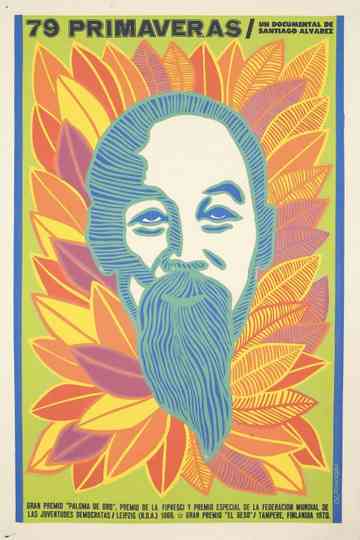
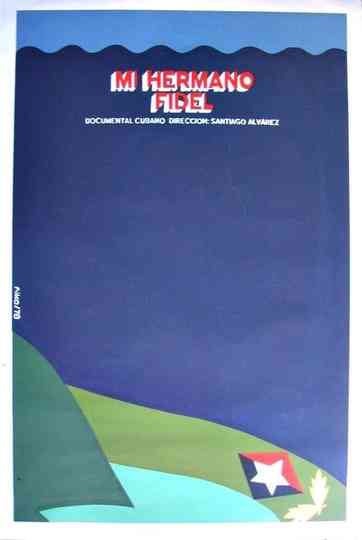
Santiago Álvarez Román (March 8, 1919 – May 20, 1998) was a Cuban documentary filmmaker and a central figure in revolutionary Latin American cinema. After studying in the United States, he returned to Cuba in the mid-1940s, where he worked as a music archivist for television and became active in Communist Party circles. Following the Cuban Revolution, he was a founding member of the Cuban Institute of Cinematographic Art and Industry (ICAIC) and went on to direct its influential weekly Latin American Newsreel, shaping a new model of politically engaged documentary production. Álvarez became internationally known for short films that combined found footage, photographs, animation, and music through rapid, associative editing—often described as “nervous montage.” His best-known works include Now! (1964), addressing racial discrimination in the United States; LBJ (1968), a satirical critique of U.S. imperialism; and 79 Springs (1969), a poetic tribute to Ho Chi Minh. In 1968, he collaborated with Fernando Solanas and Octavio Getino on The Hour of the Furnaces, a landmark four-hour documentary on neocolonialism and political struggle in Latin America. Across dozens of films, Álvarez documented music, culture, revolutionary movements, and authoritarian regimes throughout the Americas and beyond. His work influenced generations of political filmmakers, and he was later acknowledged by Jean-Luc Godard in Histoire(s) du cinéma. Álvarez died in Havana in 1998 from Parkinson’s disease and was buried in Colón Cemetery.